
BPH treatment without thermal damage.
Not all BPH procedures burn tissue. Mechanical dilation approaches achieve urethral patency without heat — preserving tissue integrity and avoiding thermal complications.
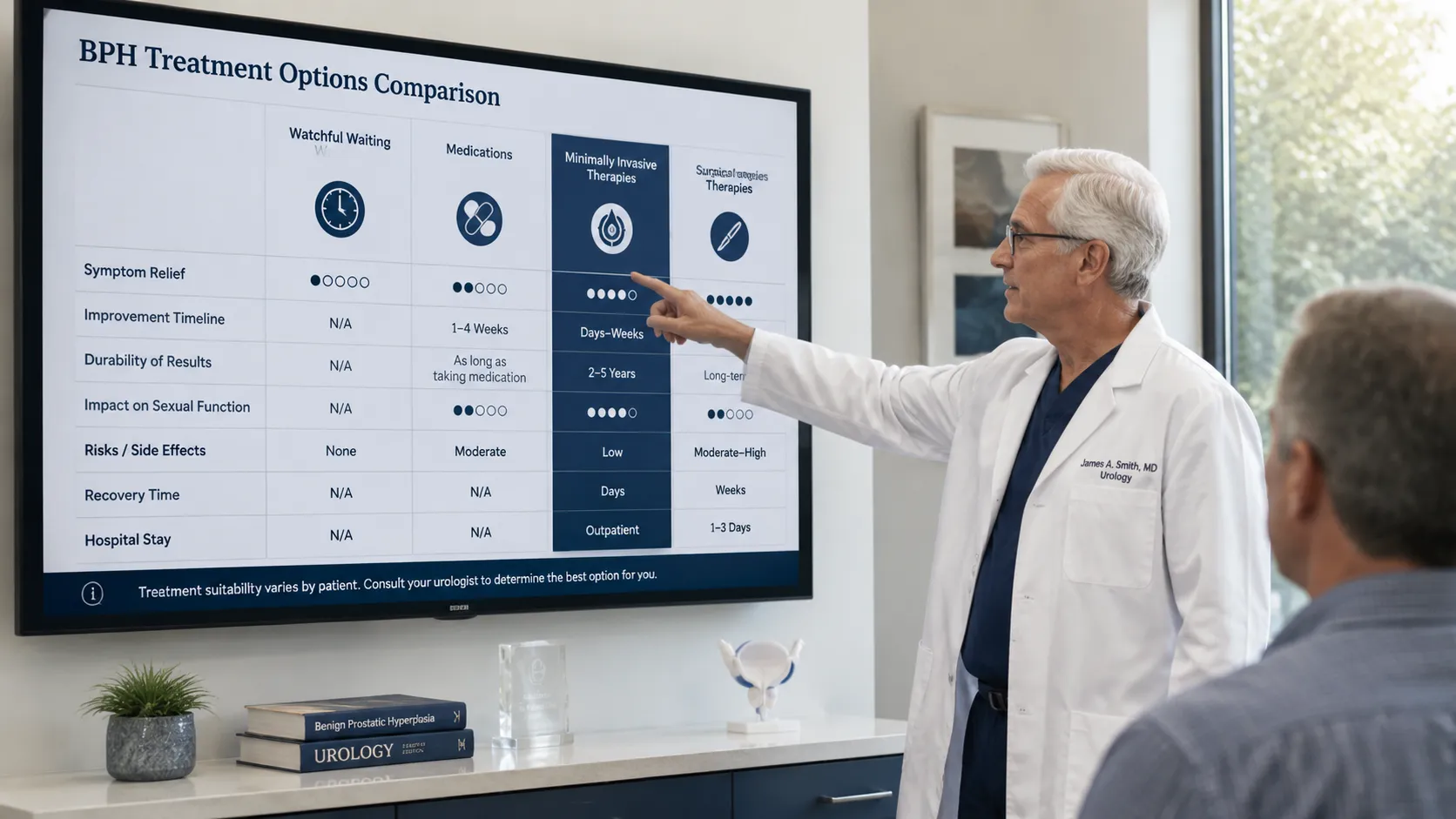
What is thermal damage in BPH treatment?
When BPH treatments use heat to ablate or resect prostate tissue, thermal energy inevitably spreads beyond the target zone. This collateral thermal effect causes:
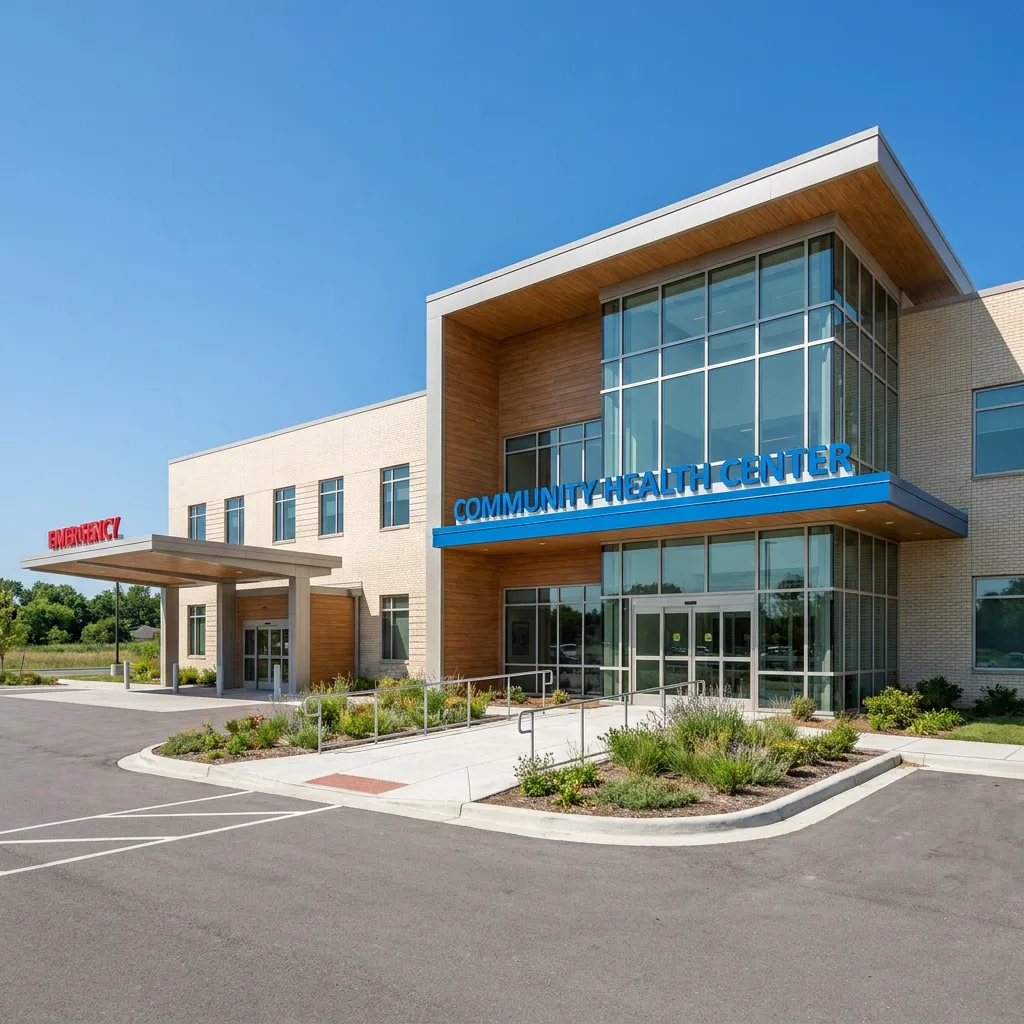
Thermal vs non-thermal: direct comparison
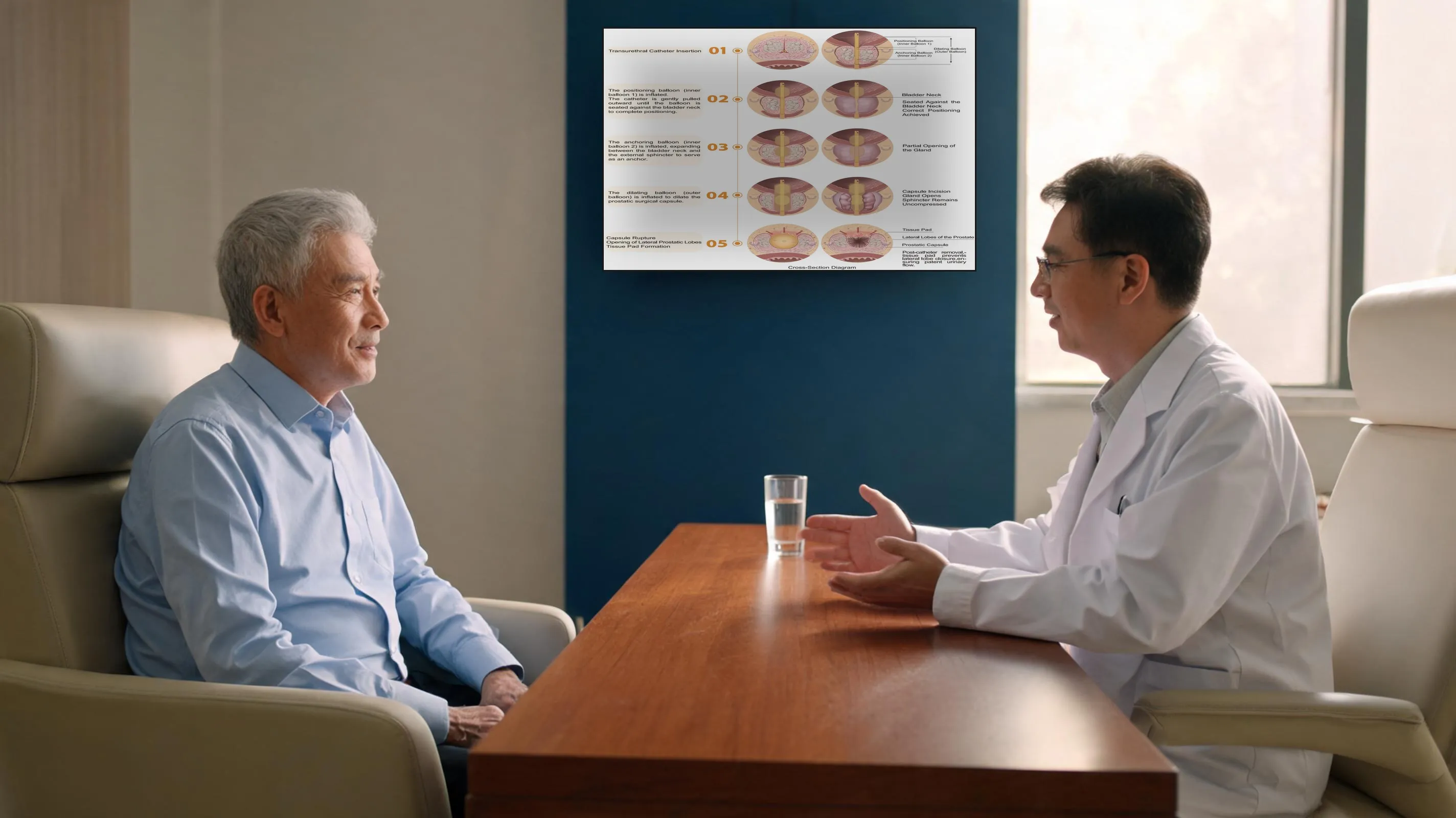
| Dimension | Nexusuro (TUCBDP) | Thermal (Rezūm / TURP / Laser) |
|---|---|---|
| Mechanism | Pure mechanical dilation, no heat | Thermal ablation or resection |
| Tissue integrity | Preserved | Disrupted |
| Thermal complications | Zero | Edema, irritation, tissue damage (variable) |
| Post-op discomfort | Mild (expansion soreness) | Moderate (burning, irritation) |
| Catheter duration | 1–3 days | 1–3 days |
| Recovery | 1–2 weeks to normal activity | 2–6 weeks (varies by procedure) |
| Learning curve | Short | Long (heat control depends on operator skill) |
| Retreatment | Long-term data accumulating | 5yr rates 10–30% by procedure |
Better fit for non-thermal
Prefer to avoid the risks and discomfort of tissue burning.
Non-thermal preserves bladder neck and verumontanum anatomy, aiding ejaculation preservation.
Nexusuro handles median lobe better than some thermal alternatives like Rezūm.
Better fit for thermal approaches
TURP or laser enucleation provides more definitive volume reduction.
Need to address multiple conditions in one procedure.
Thermal resection allows tissue sampling for histopathology.
Continue exploring
This page is for informational reference only and does not constitute medical advice. Treatment outcomes vary by individual anatomy and procedure technique. Consult a licensed physician for treatment decisions.